A free site visit, a check of what your lot allows and a written, line-item price.
Get your free estimateFast, Reliable ADU Builders Across Lakeland Village
If you’re researching what an ADU actually costs in Lakeland Village and which county requirements will hit your budget first, here’s the straight answer: a detached ADU in this area typically runs $190,000 to $340,000 depending on septic capacity, hillside grading, and fire-zone materials, while a garage-conversion JADU often lands between $85,000 and $150,000. The septic and well review through Riverside County Environmental Health is the step most homeowners don’t see coming, and it can add $15,000 to $40,000 before you ever pour a slab. Sutton ADU Riverside has been building additions and detached units across Lakeland Village long enough to scope these costs before you sign, not after the leach line gets flagged. Call (831) 217-6083 and we’ll walk your specific lot with you, no charge for the estimate.
We know Lakeland Village the way a local builder should. We know the cottage lots near the lake where the original 1940s homes sit on raised foundations with no rear alley, and we know the hillside parcels off Grand Avenue where a two-story ADU has to be sited around defensible space rules and septic reserve areas. That local familiarity changes the quote, the timeline, and the number of surprises you’ll deal with. Miles Hartwell runs our Lakeland Village work personally, and he’ll be the one who walks your property before any number gets written down.
Why Sutton ADU Riverside Is Lakeland Village’s Preferred ADU Builders Company
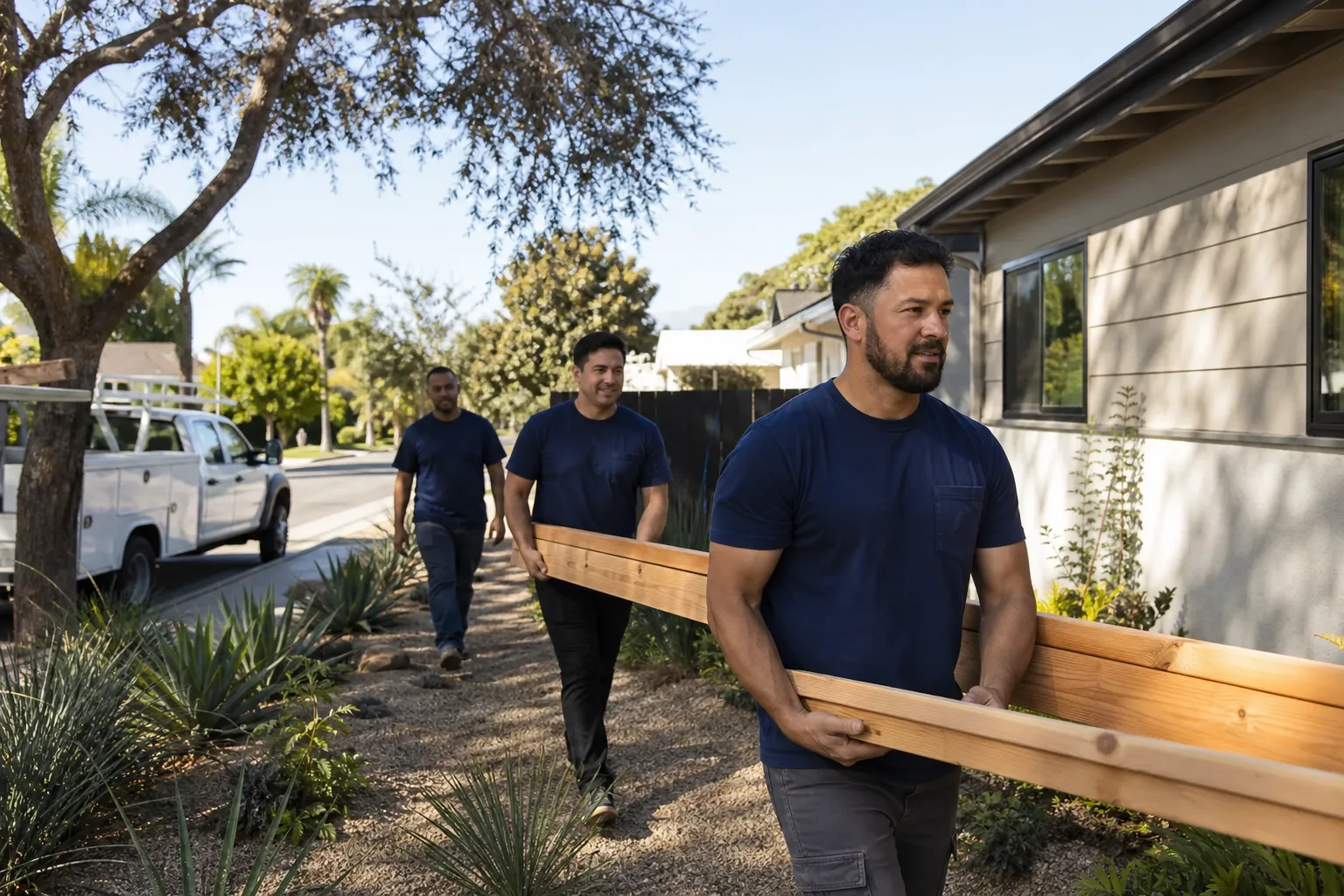
The reputation we’ve built in Lakeland Village comes from doing the unglamorous work well: pulling county permits correctly the first time, coordinating with Environmental Health on septic and well setbacks, and showing up with a crew you already know by name and face. Every technician we send to a Lakeland Village job is background-checked, identity-verified, uniformed, and photo-badged under the Threshold Verified standard. You get the name and photo of each person coming to your property before they arrive. That matters when you’re opening your gate to a construction crew, especially if you’re home alone, have young kids, or just want to know exactly who’s walking your lot.
Our ADU Builders team has built units from the lakefront flats to the upper hillside streets, and we’ve learned that every Lakeland Village project carries its own set of county rules. A flat cottage lot near the water is a different job than a sloping parcel with a septic system and a fire marshal’s setback line. We quote them differently, and we explain the difference in plain language before you commit.
When a Lakeland Village homeowner calls us, a live person answers. Not a voicemail tree. That’s true at 2 p.m. and at 2 a.m., because sometimes you’re staring at a county notice and you need an answer now. Miles Hartwell has walked dozens of Lakeland Village lots personally, and he’ll tell you honestly if your septic leach field makes a detached unit impractical, if a JADU is the smarter dollar-per-square-foot play, or if your hillside needs a retaining wall before we can even stake the footprint.
Detached ADU in Lakeland Village
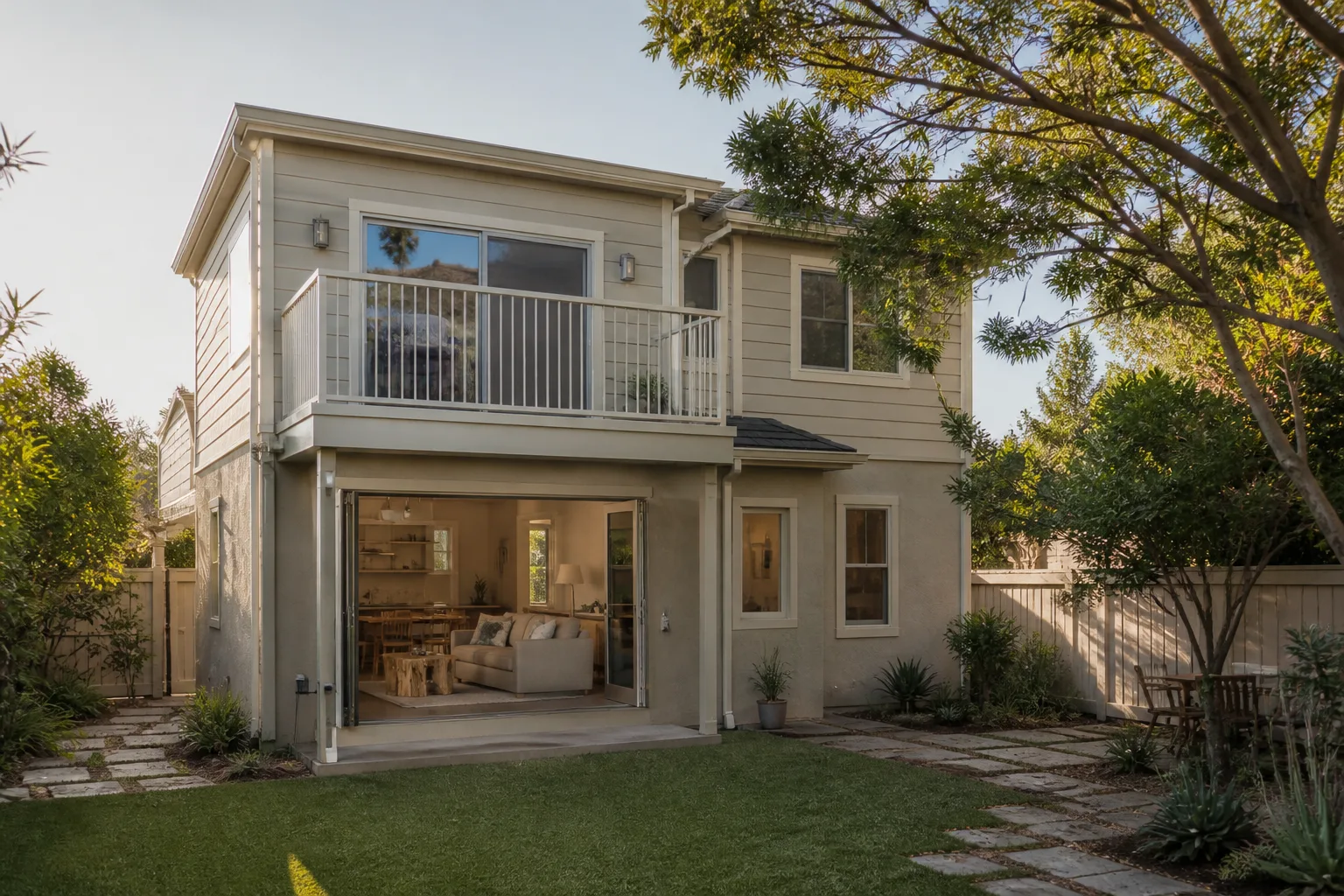
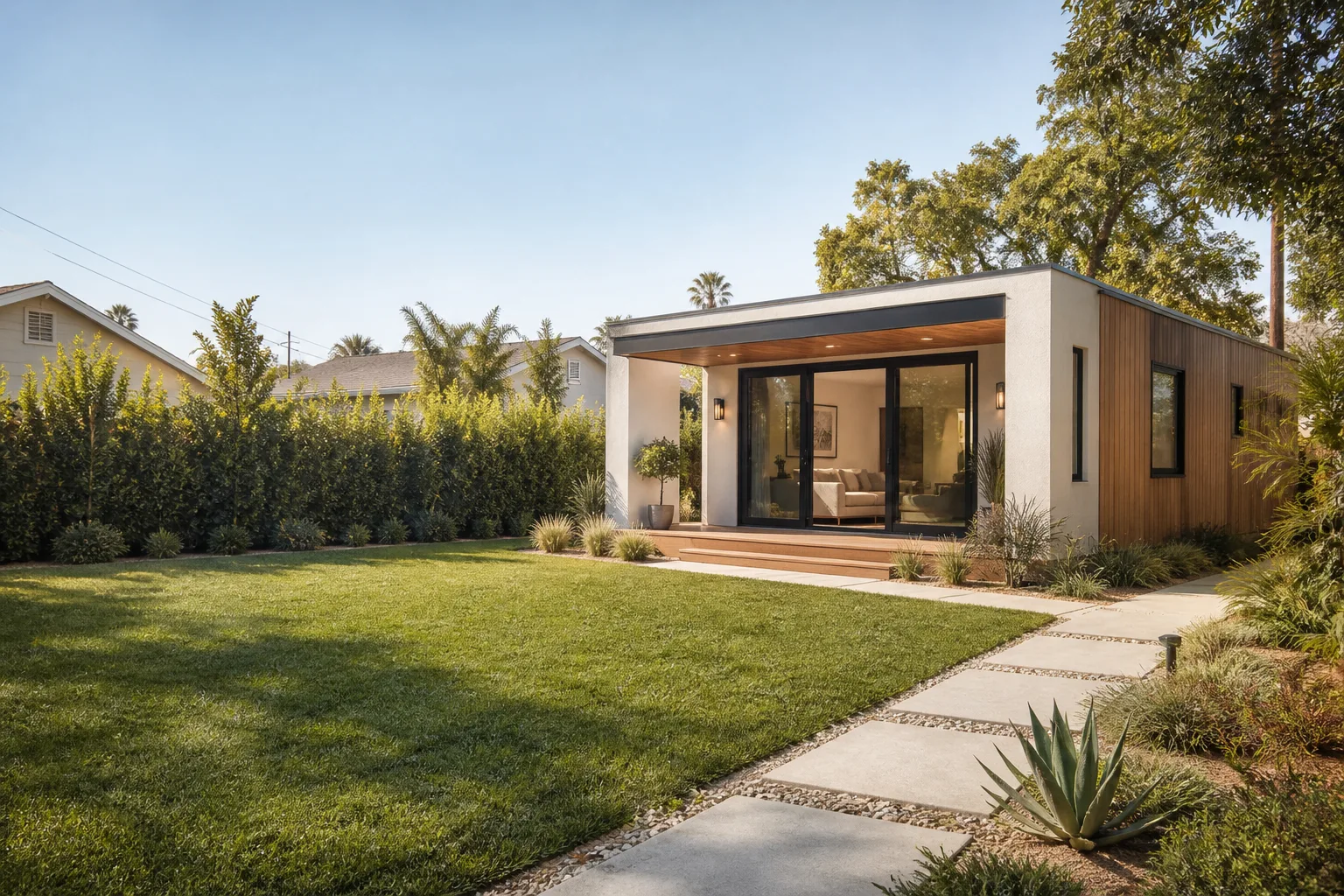
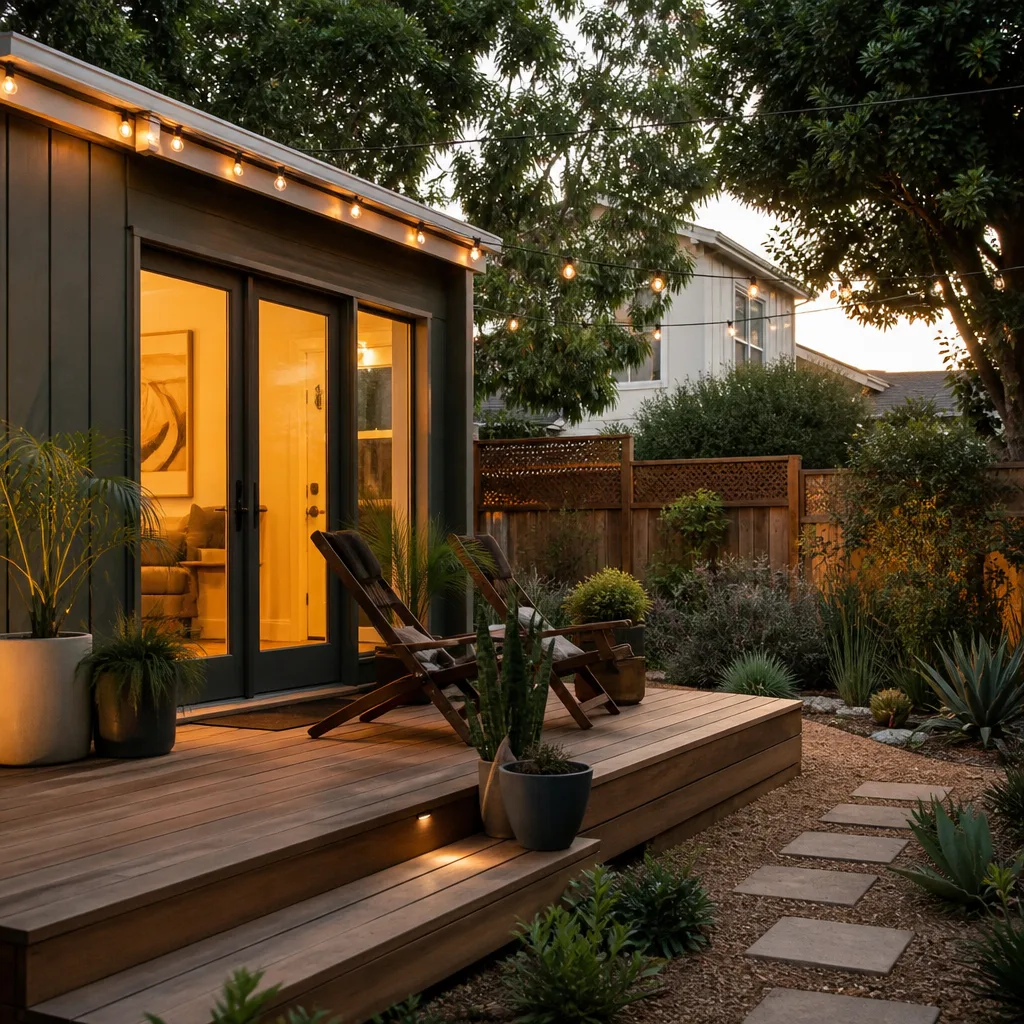
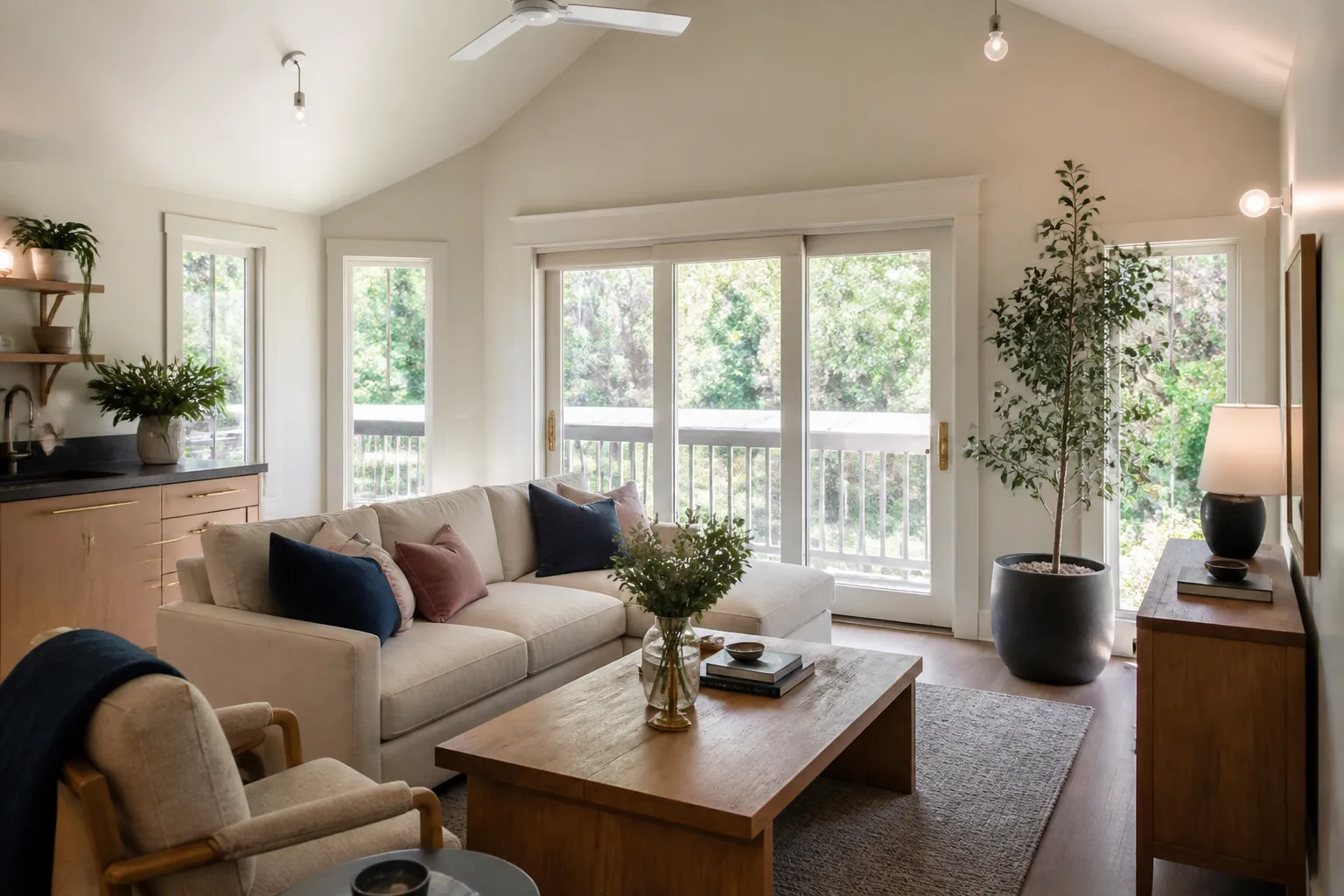
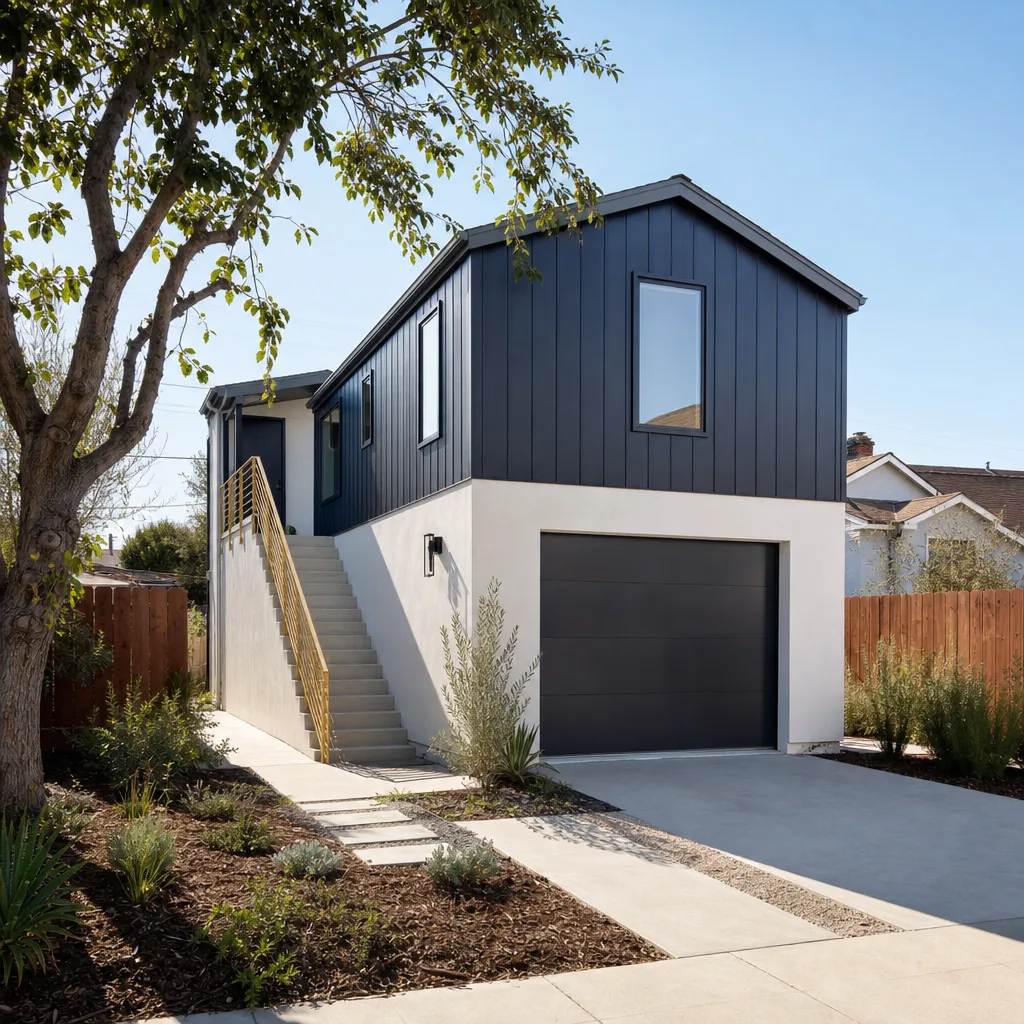
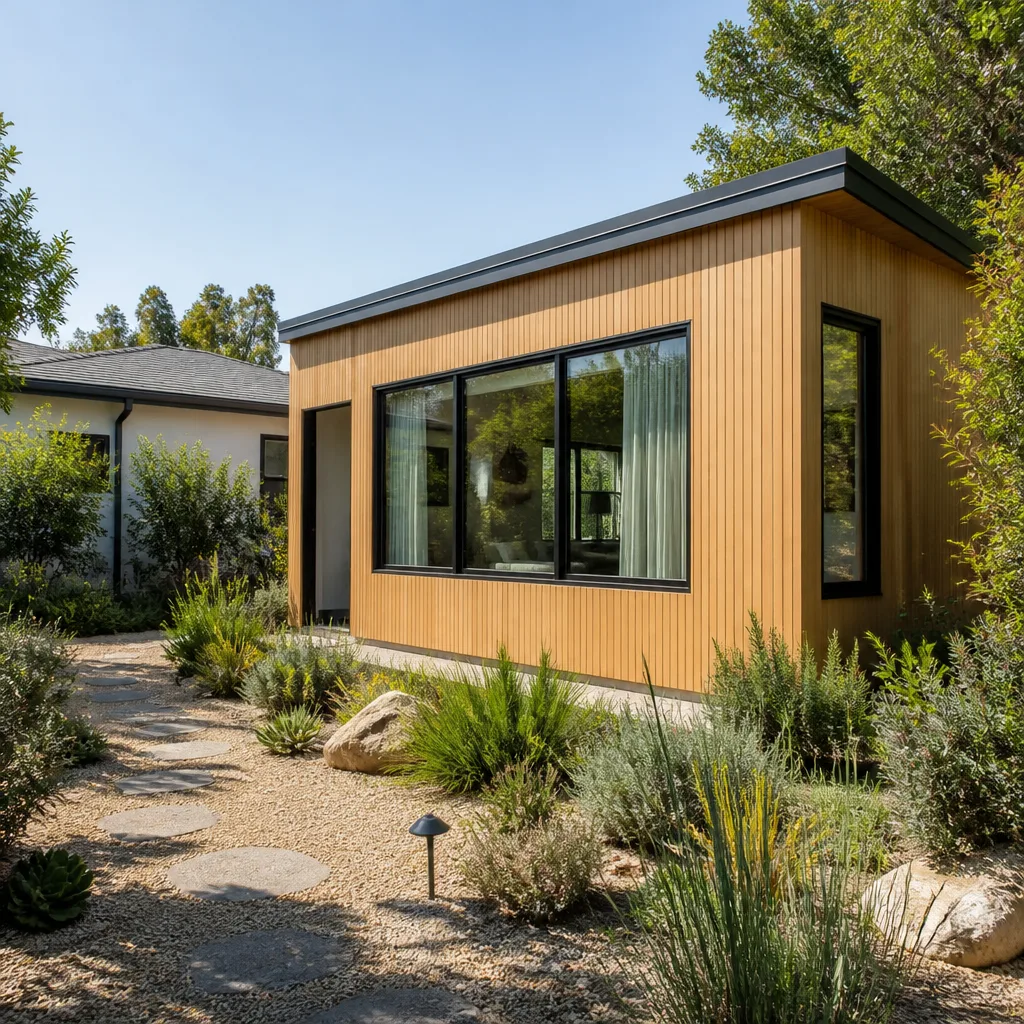
A Detached ADU in Lakeland Village is a separate living structure built on your existing parcel, and in this area it’s most often a one-bedroom unit of 400 to 800 square feet, sometimes two stories when the lot slopes and you want to preserve the view corridor. Homeowners choose this route when they want rental income, a private space for adult children or aging parents, or a lock-and-leave second unit for vacation use. Realistically, a detached ADU here runs $190,000 to $340,000, with the swing driven by septic upgrades, grading and retaining walls, fire-resistant cladding requirements, and how far the concrete trucks have to travel up a winding hillside easement.
What We Check Before Quoting
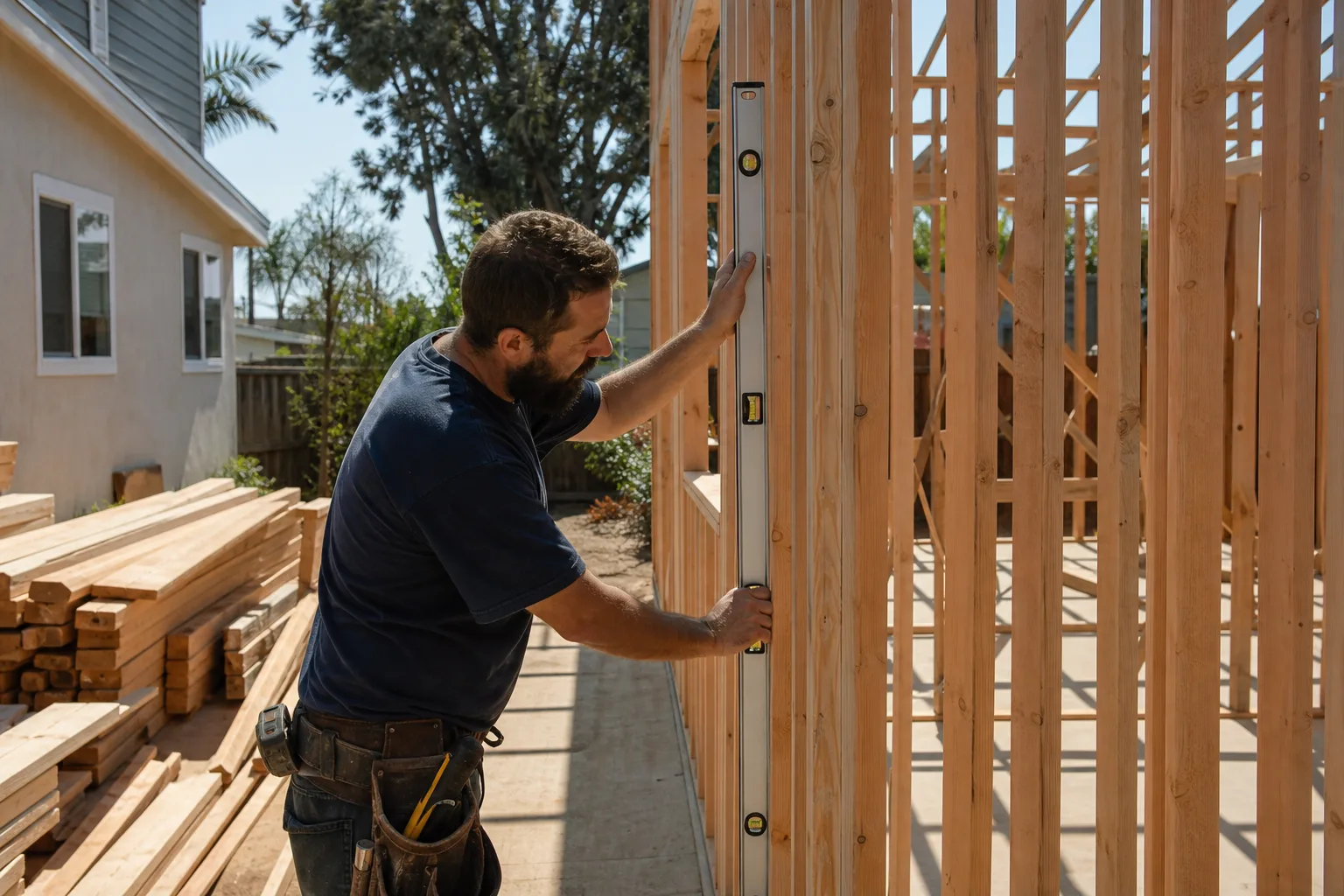
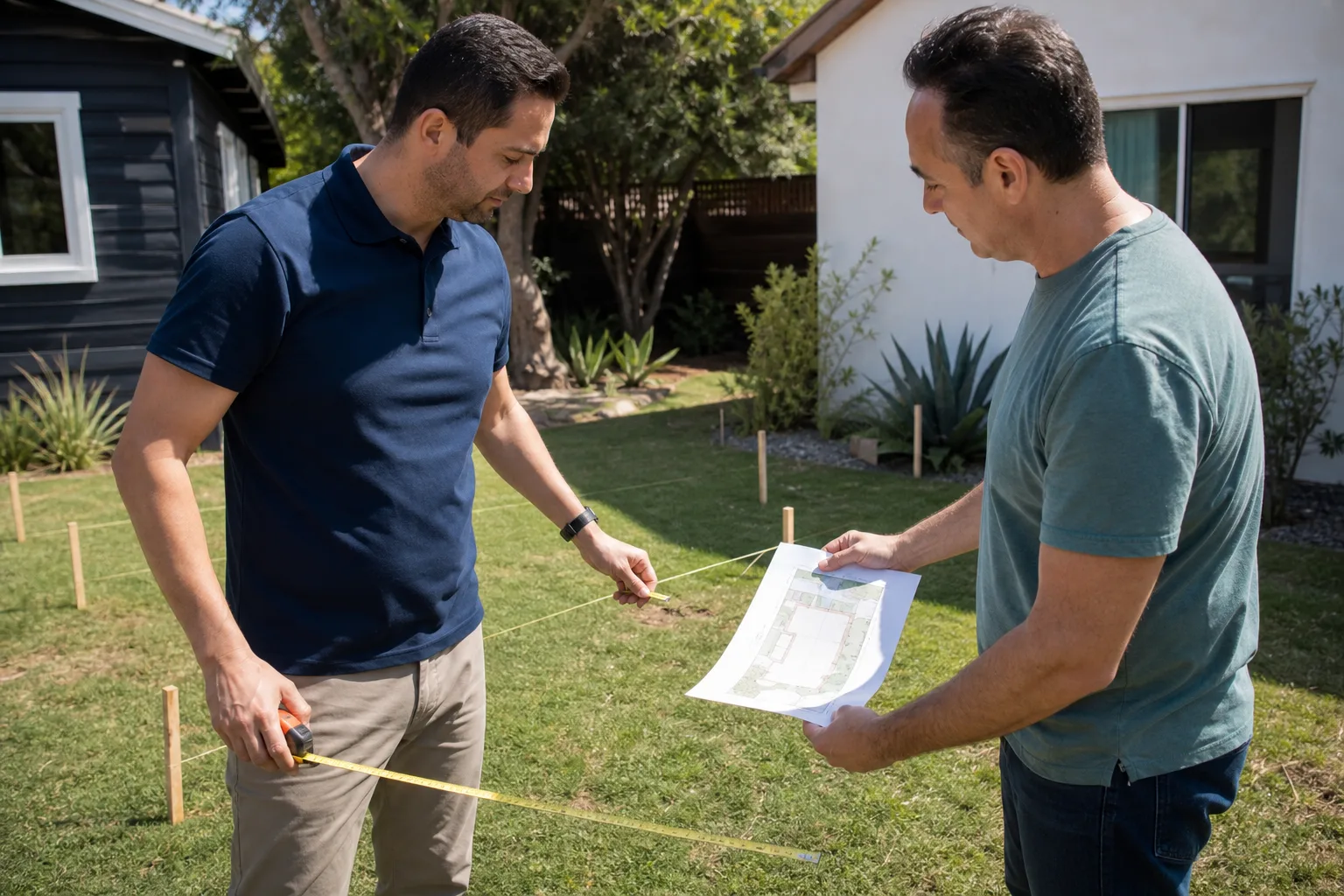
Before we put a number on a detached ADU in Lakeland Village, we walk the full lot, not just the apparent build spot. We locate the septic tank and leach lines, check the well head if the parcel isn’t on municipal water, look at the fire marshal’s defensible space requirements, and measure the actual access path for concrete and crane equipment. Skipping any one of these is how quotes come in low and then balloon once the county flags an issue. We’d rather spend the extra hour up front and give you a number that holds.
Hillside and Lakefront Siting
The hillside lots around Lakeland Village often require a geotech report and a grading plan before the county will issue a building permit. Lakefront cottages have their own complication: many sit on narrow lots with no rear access, which can push the ADU toward the front of the property or into an attached conversion rather than a separate structure. We scope both scenarios before we quote, so you’re not paying for a redesign after the fact.
JADU in Lakeland Village
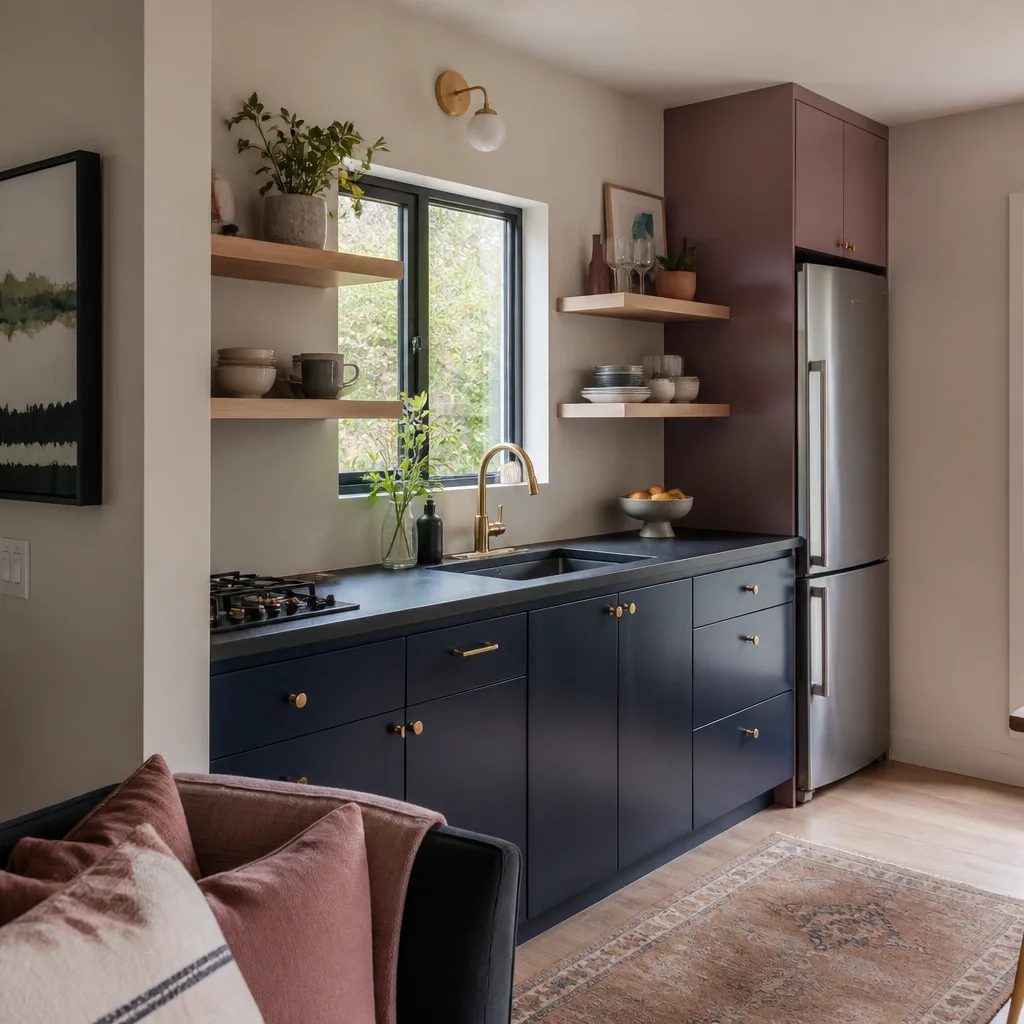
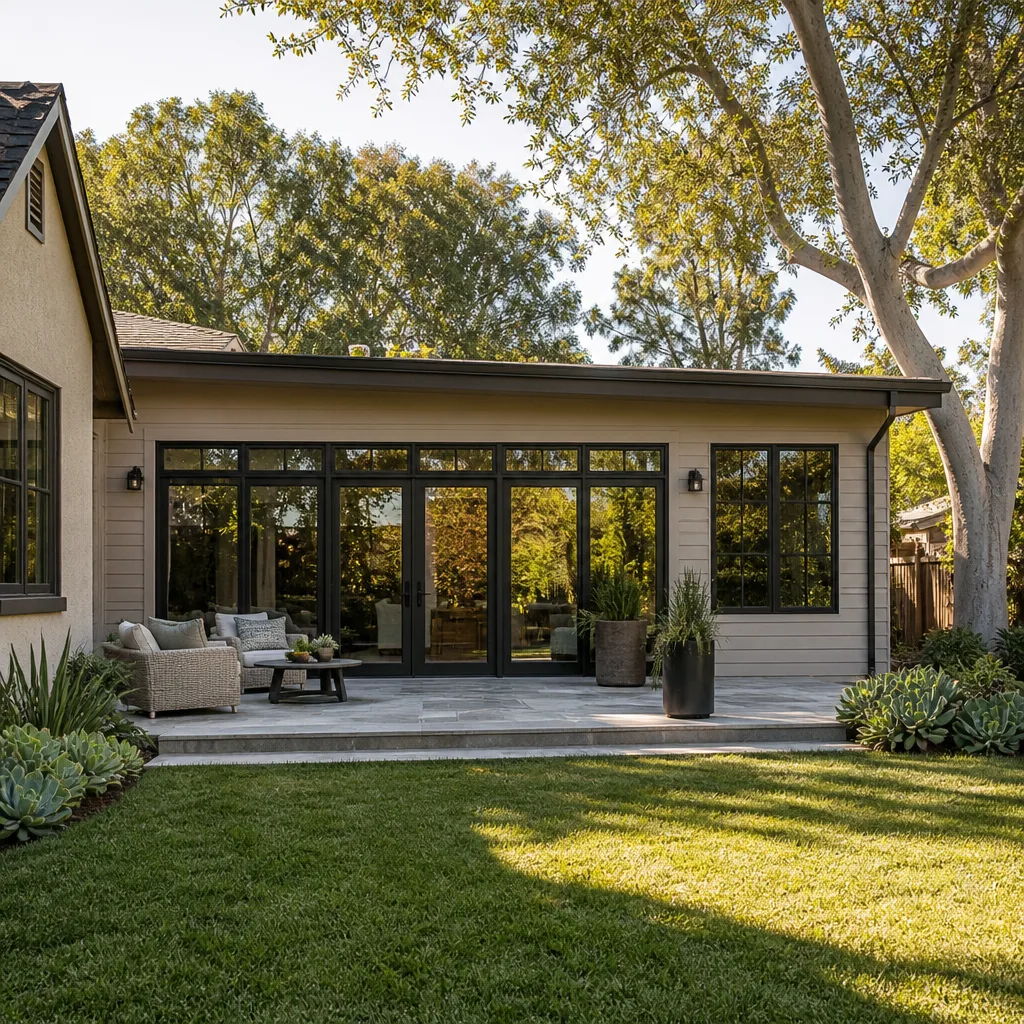
A JADU in Lakeland Village is a junior accessory dwelling unit, typically a converted space within the existing home footprint: a garage, a large bedroom, or a bonus room that gets its own kitchenette, entrance, and bathroom. It’s the most cost-effective way to add a rental unit here, running $85,000 to $150,000 depending on whether you’re converting an attached garage or finishing over a carport. Because a JADU lives inside your existing walls and foundation, it sidesteps many of the lot-level constraints, septic expansion, and grading issues that drive detached unit prices up. For a lakefront cottage with no rear yard, it’s often the only ADU that pencils out.
Garage Conversions on Older Lots
The original 1940s to 1960s cottages in Lakeland Village often have attached or detached garages that are underbuilt by modern standards. We check the slab, the roof structure, and the wall framing before we quote a conversion, because some of these older garages need structural upgrades before they can legally become living space. That’s an honest scope conversation, not a surprise change order.
JADU as a Septic Workaround
If your Lakeland Village lot is on a septic system with a leach field that can’t handle another bedroom, a JADU may still be viable because it often doesn’t trigger the same Environmental Health review as a detached unit that adds a new dwelling to the property. This is a real path for cottage owners who’ve been told their septic system kills the ADU idea. We’ll tell you if yours qualifies.
Trusted Brands We Service in Lakeland Village
We work with Abodu, Dvele, and Cover panelized and prefab systems regularly on Lakeland Village hillside lots, because those units often go together faster and with less on-site waste than stick-built framing, which matters when your access road makes a long material haul expensive. We also keep a network of local Lakeland Village suppliers for James Hardie cladding and fire-rated assemblies, so we’re not waiting on a distant distributor when the county requires ignition-resistant siding. If you’ve been researching a Tuff Shed conversion or a Mighty Buildings kit, we’ll give you an honest read on whether it fits your lot, your septic capacity, and your fire-zone requirements before you spend money on a product that won’t pencil.
Common ADU Builders Problems We See in Lakeland Village Homes
- Septic reserve areas that overlap the only flat build spot. We see this constantly on older cottage lots: the leach lines occupy the one level patch of ground, and the homeowner’s initial quote never accounted for it. A leach line relocation or redesign can add $15,000 to $40,000 and months to the permit process.
- Fire marshal setbacks that shift the footprint after the fact. Lakeland Village’s hillside fire zones require defensible space around structures, and the fire marshal’s office can require a 15-foot or greater shift in your ADU footprint. If that happens after the grading plan, you’re paying for a new plan and possibly a retaining wall.
- Access roads that can’t handle a concrete pump truck. Many hillside easements in Lakeland Village are narrow and winding. If the pump truck can’t reach the slab pour, the concrete has to be moved by wheelbarrow or a smaller line pump, which slows the pour and inflates the cost. We scope the access path before we bid.
- Raised foundations on lakefront cottages that complicate JADU conversions. The 1940s and 1950s cottages near the lake often sit on raised perimeter foundations with aging floor joists. A garage conversion or interior JADU on one of these homes usually needs structural work before any finish work begins, and that line item should be in the quote, not discovered mid-project.
Pricing for ADU Builders in Lakeland Village, CA
A detached ADU in Lakeland Village runs $190,000 to $340,000. A garage-conversion or interior JADU runs $85,000 to $150,000. These are honest ranges for this specific market, where septic systems, well setbacks, hillside grading, and fire-zone cladding all punch above what they’d cost on a flat, sewer-connected lot in a nearby city. The biggest single variable is usually the septic review: if your leach field can’t absorb the new bedroom count, you’re looking at a septic upgrade or an alternative system, and that’s a five-figure line item. We write the full scope, every line item, into a fixed price before any work begins. No allowances that balloon later. Call (831) 217-6083 for a free estimate on your specific lot.
We Also Serve Cities Near Lakeland Village
While this page is focused on ADU Builders in Lakeland Village, our crews also build in Riverside, Rancho Cucamonga, Corona, and Menifee. Each city carries its own permitting quirks, and we scope them the same way we do here: walk the lot, check the septic or sewer, measure the access, and write a real number before anything gets signed.
Serving Lakeland Village, CA - Our Local Coverage Area
We’re based in the Lakeland Village area and know this community well. Use the map below to see our service coverage - if you’re nearby, we can almost certainly help.
FAQs About ADU Builders in Lakeland Village
A septic system changes Lakeland Village ADU feasibility significantly, because adding a bedroom or a new dwelling triggers a Riverside County Environmental Health review that doesn’t happen on sewer-connected lots in Lake Elsinore city limits. If your leach field doesn’t have capacity for the added wastewater, you’ll need a septic upgrade, a leach line relocation, or an alternative system before the ADU permit can proceed. That work typically adds $15,000 to $40,000 and several months to your timeline. Call (831) 217-6083 and we’ll check your septic layout before you commit to a design.
Yes, many Lakeland Village hillside lots require a geotechnical report, a grading plan, and often retaining walls before an ADU foundation can be approved. The county wants to see that the slope is stable and that drainage is engineered, not improvised. A retaining wall alone can run $8,000 to $25,000 depending on height and access, and that’s before the ADU itself is built. We include grading scope in our written price up front.
Yes, ADUs built in the fire-prone hillside zones around Lakeland Village typically must use ignition-resistant siding like James Hardie fiber cement and Class A roofing assemblies. The exact requirement depends on your parcel’s fire severity zone and defensible space clearance, which the fire marshal’s office will confirm during plan review. We quote these materials as the default on hillside projects rather than letting it become a change order.
You can build a two-story detached ADU on a steep Lakeland Village lot, and it’s often the smartest way to capture views while minimizing the structure’s footprint. The engineering and foundation work is more involved, a post-tension slab or pier-and-grade-beam system is common, and crane access may be required for panelized or prefab shells. A two-story hillside unit here generally runs $250,000 to $340,000 depending on access and grading. We’ll tell you if your slope makes a single-story unit a better financial decision before you spend on plans.
Lakeland Village ADU projects get stuck at permitting most often because the application didn’t account for septic review, fire marshal setbacks, or hillside grading requirements at the start. When the county flags an issue mid-review, the applicant has to revise plans, order new reports, and sometimes redesign the unit footprint, which adds months and thousands in fees. We front-load these county-specific checks before we submit anything, which is why our Lakeland Village permits tend to move through review without the stop-and-revise cycle.
Written by Miles Hartwell, Owner at Sutton ADU Riverside, serving Lakeland Village and surrounding Riverside County communities.